
AI AGENT CASE STUDY: HOW WE HELPED LOGIC LUMINATE REDUCE CPA FROM $2800 TO $475

AI agent case study

In 3 Months, Our AI Agent Increased reply rates from under 5% to 34%, raise close rate from 12% to 67%, and cut CPA from $2,800 to $475 in just 3 months

Logic Luminate, a digital marketing agency serving mid-market B2B companies, had a strong offer but a painfully manual outbound process.

We implemented an AI-driven prospecting and outbound system that helped them identify stronger-fit leads, personalise outreach at scale, and operate with far greater consistency.
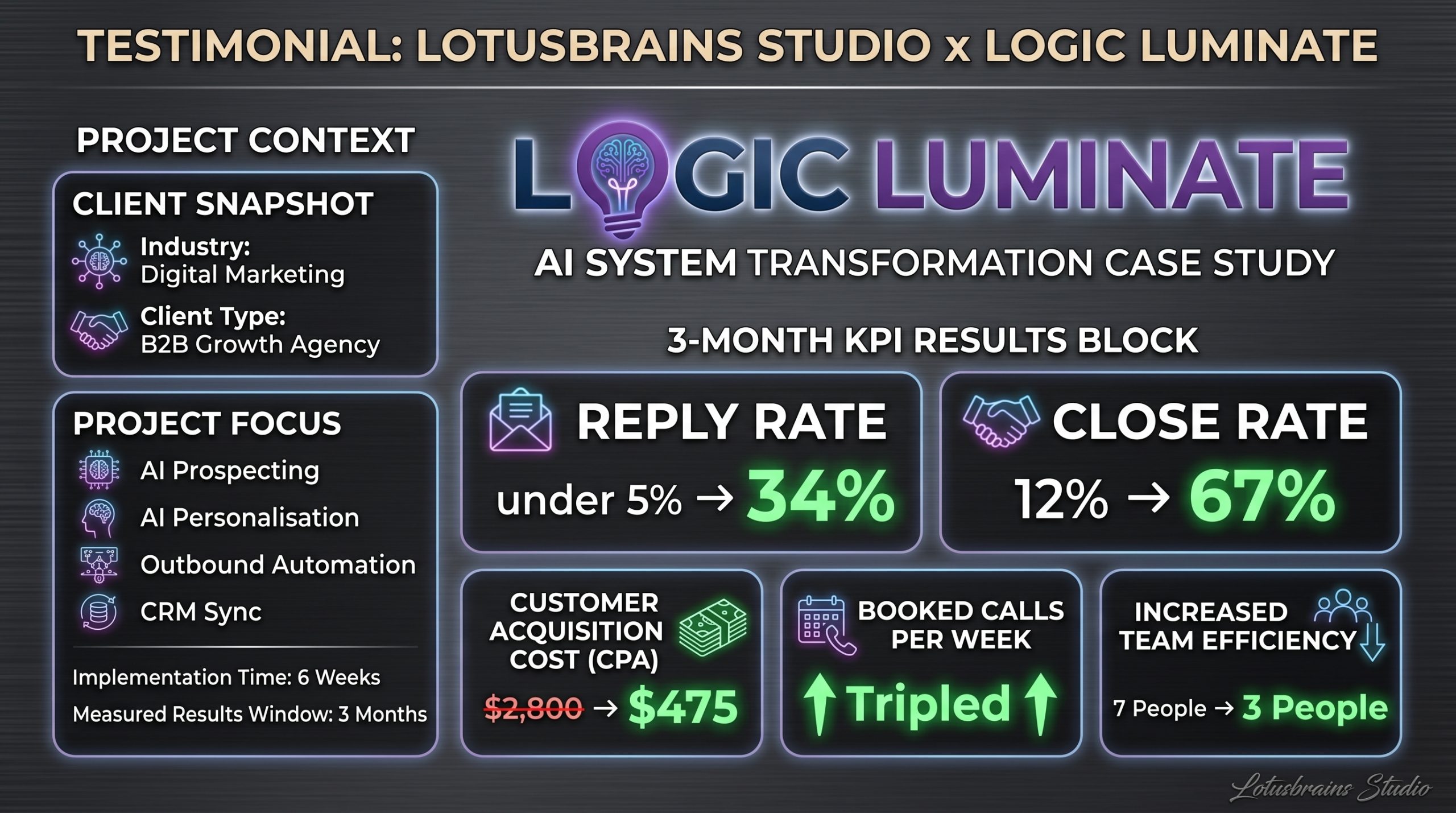
  • Industry: Digital Marketing
  • Client Type: B2B Growth Agency
  • Implementation: 6 Weeks
  • Measured Window: 3 Months
Logic Luminate AI system transformation case study showing client context and KPI improvements

Reply rate

under 5% → 34%

More relevant outreach created stronger first conversations.

Close rate

12% → 67%

Better-fit prospects improved the quality of booked calls.

Booked calls

Tripled

Outbound execution became more consistent and easier to scale.

Customer acquisition cost

$2,800 → $475

The team generated pipeline with far less manual effort.

About Logic Luminate

A B2B growth agency with a strong offer, but an outbound engine that was not built for scale.

Logic Luminate helps businesses grow through strategic marketing, lead generation, and campaign delivery. Their core offer is designed for mid-market B2B companies that want more than generic agency support.

Their ideal buyers are typically seven-figure business owners, heads of growth, or marketing directors looking for a more intelligence-led, results-driven marketing partner.
Seven-figure businesses Companies with enough complexity to need sharper pipeline systems.
Growth leaders Decision-makers responsible for lead generation and revenue outcomes.
Marketing directors Teams looking for measurable, intelligence-led execution.

The challenge

The problem: too much manual effort, too little commercial leverage.

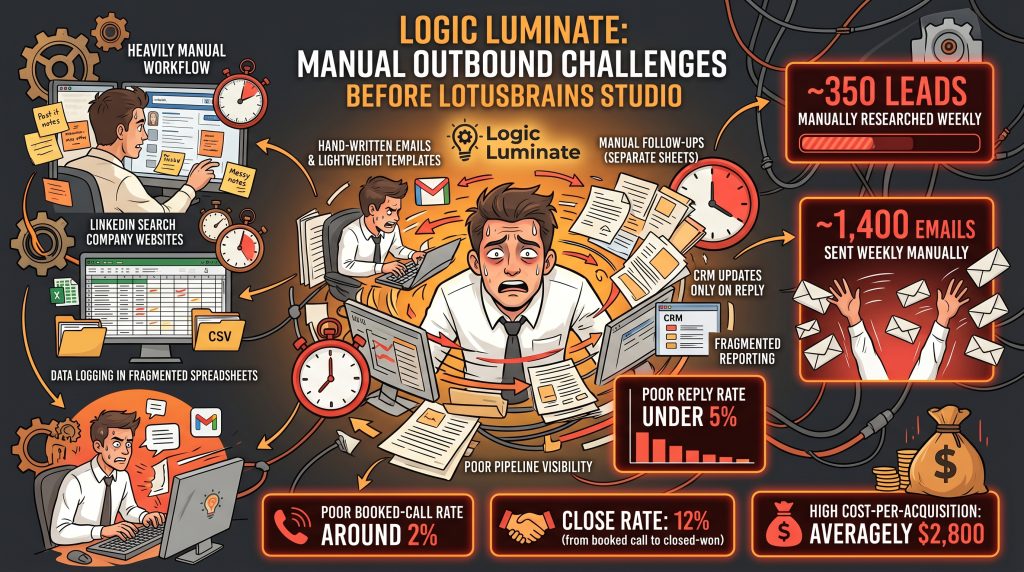
Before working with us, Logic Luminate's outbound workflow was heavily manual from start to finish. The team was working hard, but the system around them was not built to scale.

Their team manually browsed LinkedIn and company websites to identify prospects, checked industries and job titles by hand, logged data in spreadsheets, exported contact records to CSV files, wrote emails by hand or from lightweight templates, and tracked follow-ups in separate sheets.

CRM updates only tended to happen once somebody replied, which meant pipeline visibility was poor and reporting was fragmented.

Prospecting consumed an enormous amount of time. With a seven-person sales team, Logic Luminate was spending around 280 hours per week on prospecting-related activity alone.

Personalisation at scale was almost impossible. Because reps were manually researching and writing outreach, messaging either took too long to create or became too generic to convert well.

Generic mass messaging simply does not work anymore. Logic Luminate did not need more sales activity. They needed a smarter AI agent.
Manual prospecting Lead research depended on repetitive profile checks, website review, and spreadsheet handling.
Weak qualification Lead fit was judged manually and inconsistently, so effort leaked into low-fit opportunities.
Generic outreach Personalised emails were hard to scale without either slowing the team down or diluting relevance.
Fragmented visibility Prospecting, follow-up, and CRM activity lived across disconnected tools and late-stage updates.

Why Logic Luminate chose us

They wanted more than off-the-shelf automation.

Logic Luminate had been referred to us because they wanted an AI partner who would understand the business properly before building around it. Their challenge was not simply a tooling problem. It was a workflow, decision-making, and scale problem.

From the start, our focus was not on layering random AI tools into their sales process. The aim was to understand the commercial logic behind the work before deciding what should be automated.

We looked closely at how they sourced leads, how they judged prospect fit, where friction appeared in their outbound motion, and what kind of messaging actually reflected their positioning.

The strategic question was not, "What can AI do?" It was, "Where can AI improve the quality of outbound decisions while preserving commercial control?"
Business-first discovery The system was shaped around real sales behaviour, not generic automation templates.
Commercially grounded AI Automation decisions were tied to pipeline quality, relevance, and conversion leverage.
Control where it mattered The workflow was designed to scale output without sacrificing judgment or message quality.

AI agent solution

An AI-driven outbound system built around relevance, prioritisation, and scale.

We designed and implemented a multi-layer AI outbound system to help Logic Luminate move from manual prospecting and inconsistent outreach to a more intelligent, scalable growth engine.
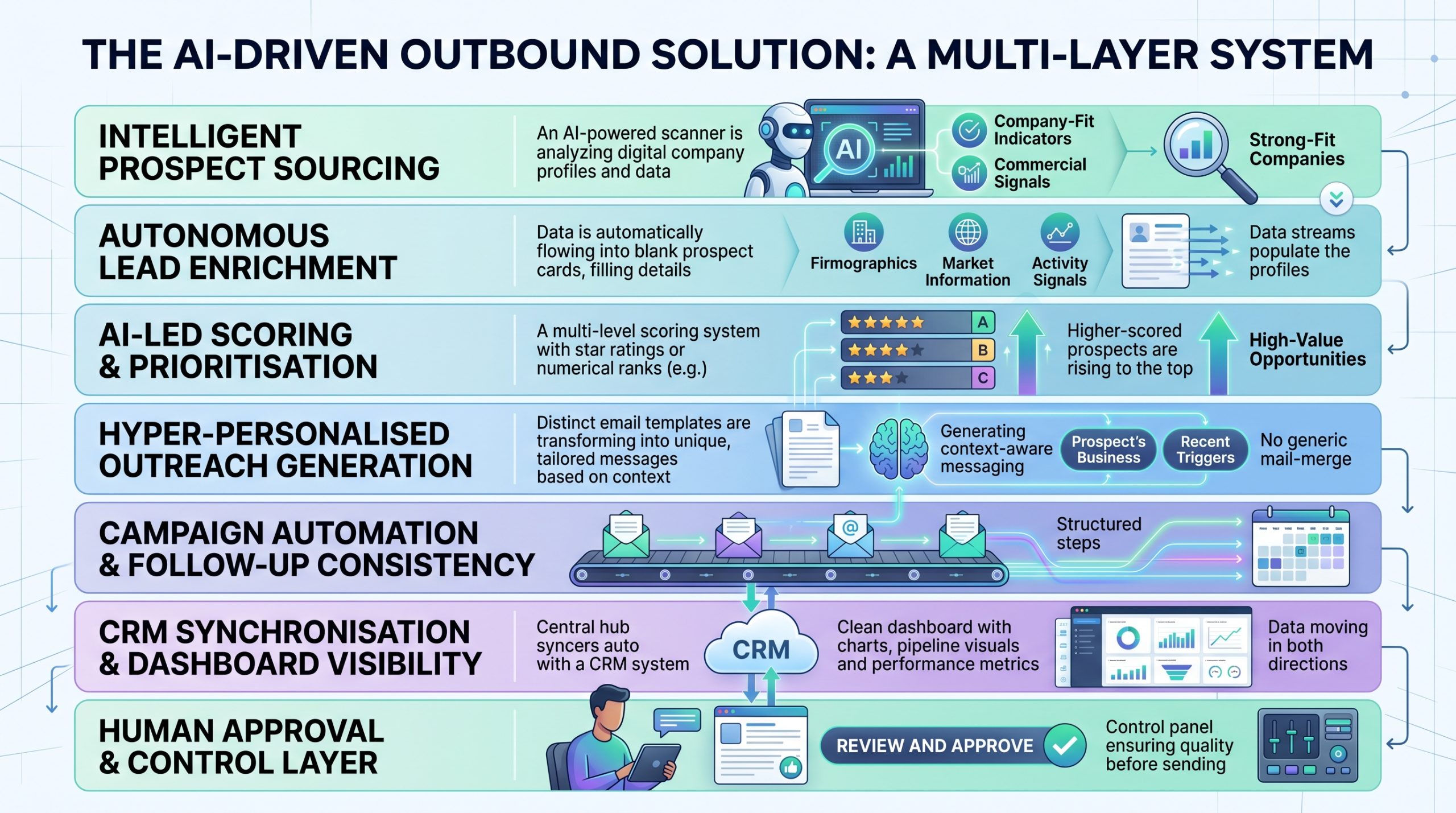
AI-driven outbound solution process showing prospect sourcing, enrichment, scoring, personalised outreach, automation, CRM sync, and human approval

The goal was not to create a giant volume machine. It was to help Logic Luminate focus on companies that were more commercially relevant from the start, then give the sales team the context, prioritisation, and workflow consistency needed to convert those opportunities more effectively.

Without revealing proprietary implementation details, the solution combined prospect sourcing, enrichment, scoring, message generation, campaign automation, CRM synchronisation, dashboard visibility, and human approval into one controlled outbound engine.

In short, the project was not just about automating tasks. It was about improving the quality of outbound decisions while reducing the amount of manual effort required to execute them.
01

Intelligent prospect sourcing

The AI automation helped identify stronger-fit companies using company-fit indicators and commercial signals, reducing reliance on manual lead hunting.

02

Autonomous lead enrichment

The system added firmographic, market, and activity context so prospects became commercially useful records rather than names in a spreadsheet.

03

AI-led scoring and prioritisation

Leads were classified by fit and engagement potential so the team could focus on higher-value opportunities first.

04

Hyper-personalised outreach generation

Outreach moved beyond cosmetic mail-merge personalisation into context-aware messaging shaped around the prospect's business and likely needs.

05

Campaign automation and follow-up consistency

Outbound sequences became more structured and dependable, removing reliance on rep memory or spreadsheet tracking.

06

CRM synchronisation and dashboard visibility

Two-way CRM sync and dashboard visibility created cleaner feedback across lead status, outreach activity, and pipeline performance.

07

Human approval and control layer

Quality assurance remained built into the workflow, preserving trust, commercial judgment, and brand protection as the system scaled.

Implementation

How the AI outbound system was rolled out in 6 weeks.

The full implementation took 6 weeks. We used a phased rollout so Logic Luminate could build trust in the system, validate output quality, and refine the workflow before scaling it across the sales motion.
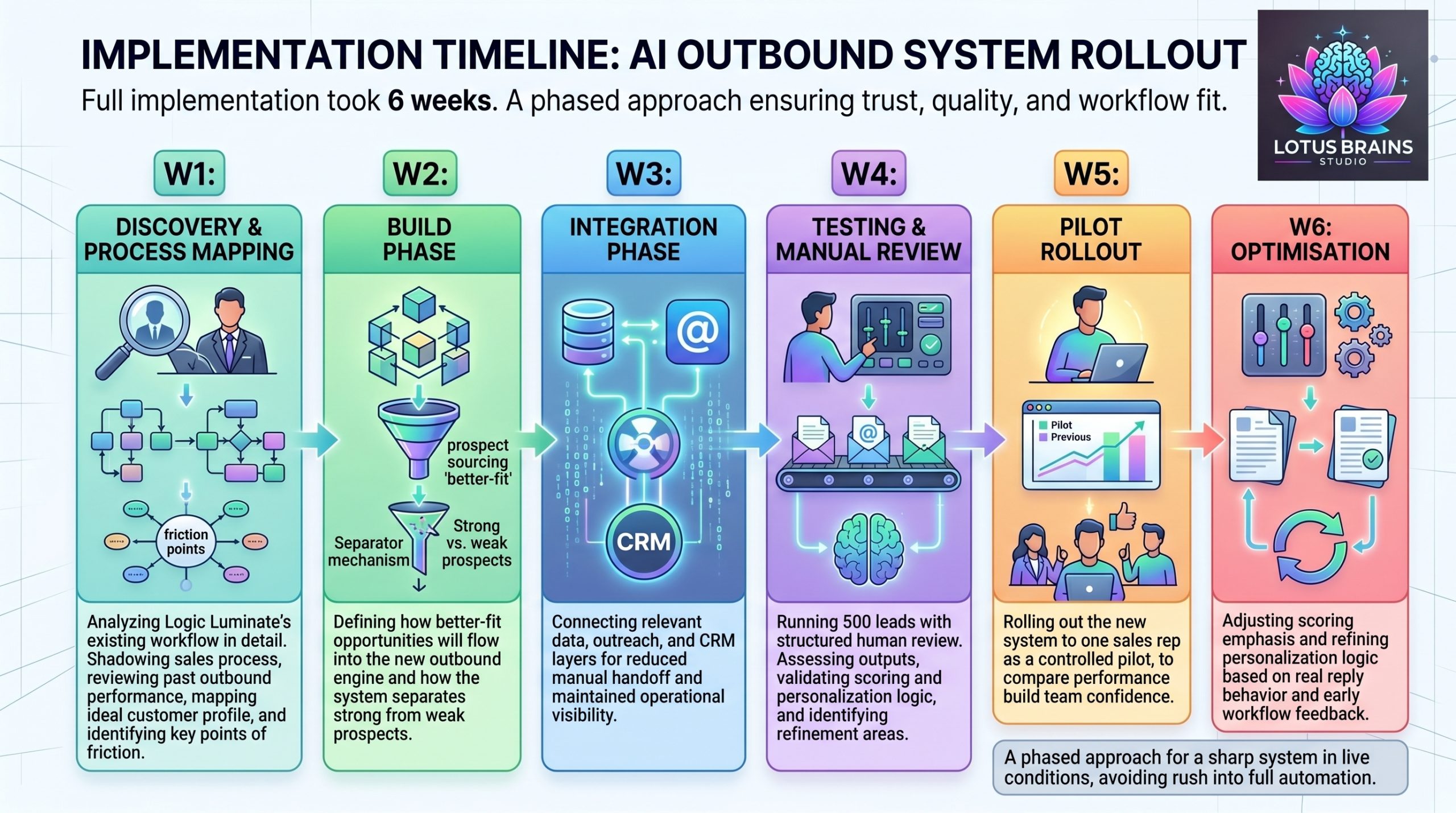
Six week AI outbound implementation timeline showing discovery, build, integration, testing, pilot rollout, and optimisation
Week 1

Discovery and process mapping

We analysed the existing workflow, shadowed the sales process, reviewed past outbound performance, mapped the ideal customer profile, and identified key friction points.

Week 2

Build phase

We built the prospect sourcing, enrichment, and scoring framework that would become the foundation of the new outbound engine.

Week 3

Integration phase

We connected the relevant data, outreach, and CRM layers so the workflow could operate with far less manual handoff.

Week 4

Testing and manual review

We ran 500 leads through the system with structured human review, validating scoring quality, personalisation logic, and commercial fit.

Week 5

Pilot rollout

The new workflow was rolled out to one sales rep first, creating a controlled comparison point before wider adoption.

Week 6

Optimisation

Using real reply behaviour and early workflow feedback, we adjusted scoring emphasis and refined personalisation logic for live conditions.

Why the phased rollout mattered This approach helped Logic Luminate avoid rushing into full automation before trust, quality, and workflow fit had been established.

What made the system effective

Why the AI system became so intelligent and powerful.

What made this implementation powerful was not simply that AI was introduced. It was that the entire prospecting-to-outbound motion became more intelligent, more structured, and more commercially useful.

Before implementation

Manual effort drove the outbound motion.

  • Research depended heavily on manual prospect checks.
  • Qualification was subjective and inconsistent.
  • Execution relied on rep memory and separate spreadsheets.

After implementation

Structured intelligence guided the workflow.

  • Stronger-fit prospects surfaced earlier.
  • Outreach angles were shaped by richer context.
  • Follow-up, CRM visibility, and oversight became systematic.
01

Better prospect context

Richer lead context was available before outreach, so the team no longer started from a cold, generic baseline.

02

Smarter prioritisation

Effort was directed toward stronger opportunities instead of being spread evenly across every prospect.

03

More relevant messaging

Outreach became more contextual and less robotic, creating stronger reasons for prospects to reply.

04

Systematic follow-up

Follow-up became structured and dependable rather than dependent on spreadsheets or individual rep memory.

05

Clearer CRM visibility

Pipeline data, campaign activity, and lead status became easier to track across the workflow.

06

Human oversight where it mattered

Quality control remained in the process, preserving trust and commercial judgment as automation scaled.

That changed the quality of conversations the team was starting. Logic Luminate entered sales conversations with stronger prospect context, better outreach angles, and a cleaner system behind the scenes.

Human oversight and safeguards

Scaling AI without sacrificing control, quality, or brand protection.

One reason AI implementations fail is that businesses either over-trust them too quickly or force them into workflows with no guardrails. We avoided both mistakes by keeping humans in the loop at the right moments.
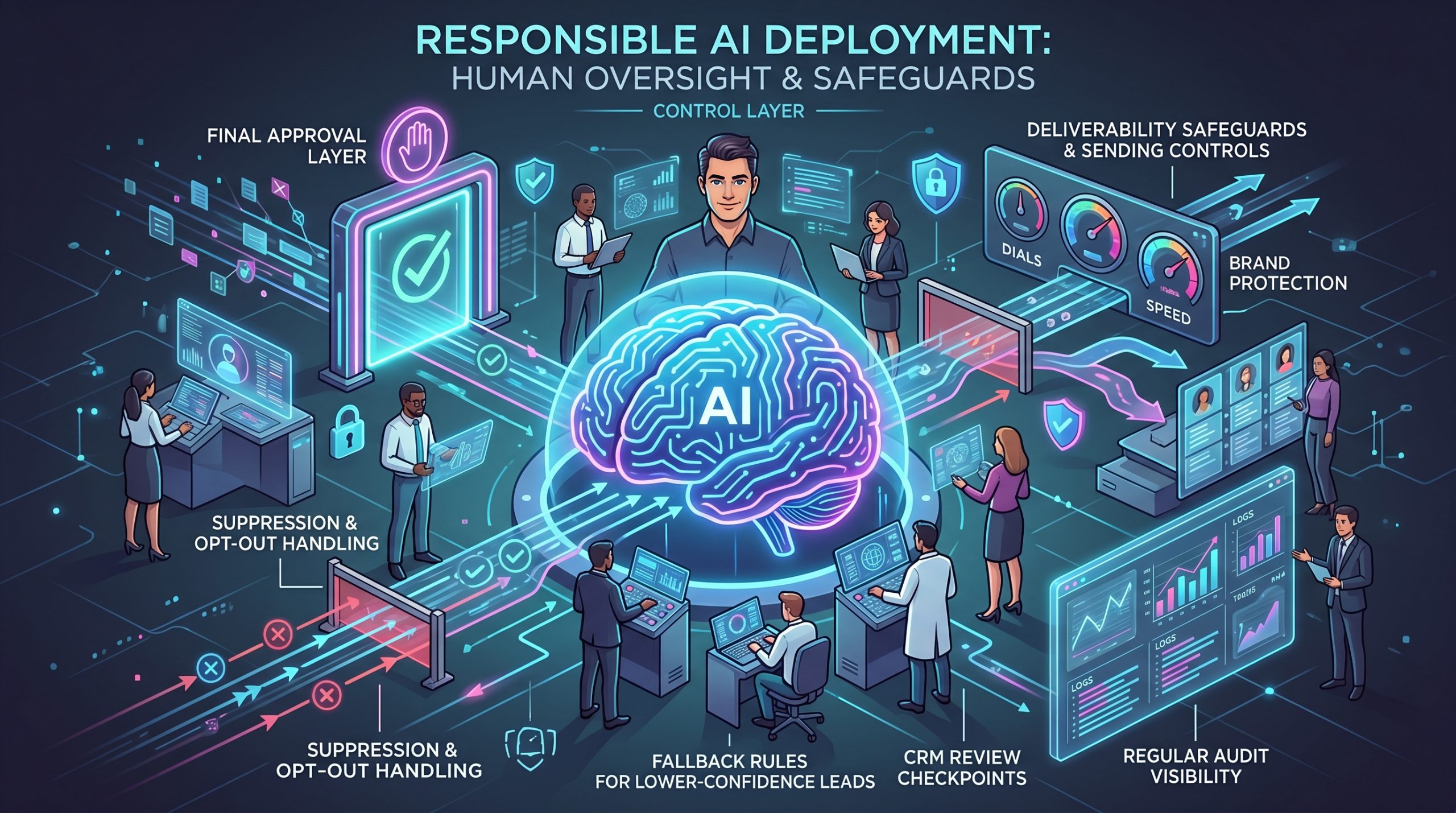
Responsible AI deployment showing human oversight, safeguards, control layers, deliverability controls, opt-out handling, CRM checkpoints, and audit visibility

Logic Luminate did not want reckless automation, and neither did we. The outbound engine needed to scale responsibly while preserving commercial judgment, message quality, and trust.

That meant the system was designed with control points around approval, suppression, deliverability, fallback handling, CRM review, and audit visibility.

The objective was speed with discipline: more consistency from AI, without giving up the human judgment that protects the brand.
01

Final approval layer

Human review remained in the workflow so quality control was preserved before high-impact outbound activity went live.

02

Suppression and opt-out handling

The system respected suppression rules and opt-out signals so the outbound engine did not create unnecessary risk.

03

Deliverability safeguards

Sending controls helped protect domain health, campaign reliability, and the long-term quality of outbound execution.

04

Fallback rules for lower-confidence leads

Lower-confidence prospects followed safer workflows, preventing weak-fit leads from receiving the same treatment as high-confidence opportunities.

05

CRM review checkpoints

Review points were built in before direct sales rep action, improving operational clarity and reducing messy handoffs.

06

Regular audit visibility

The team could review campaign behaviour, system decisions, and workflow performance instead of operating from a black box.

The result was controlled scale. Logic Luminate could benefit from the speed and consistency of AI without sacrificing control, message quality, or brand protection.

Results

The outcome after 3 months.

The impact was transformational. Within three months of implementation, Logic Luminate had a far more efficient outbound engine capable of producing stronger results with fewer people and far less manual effort.
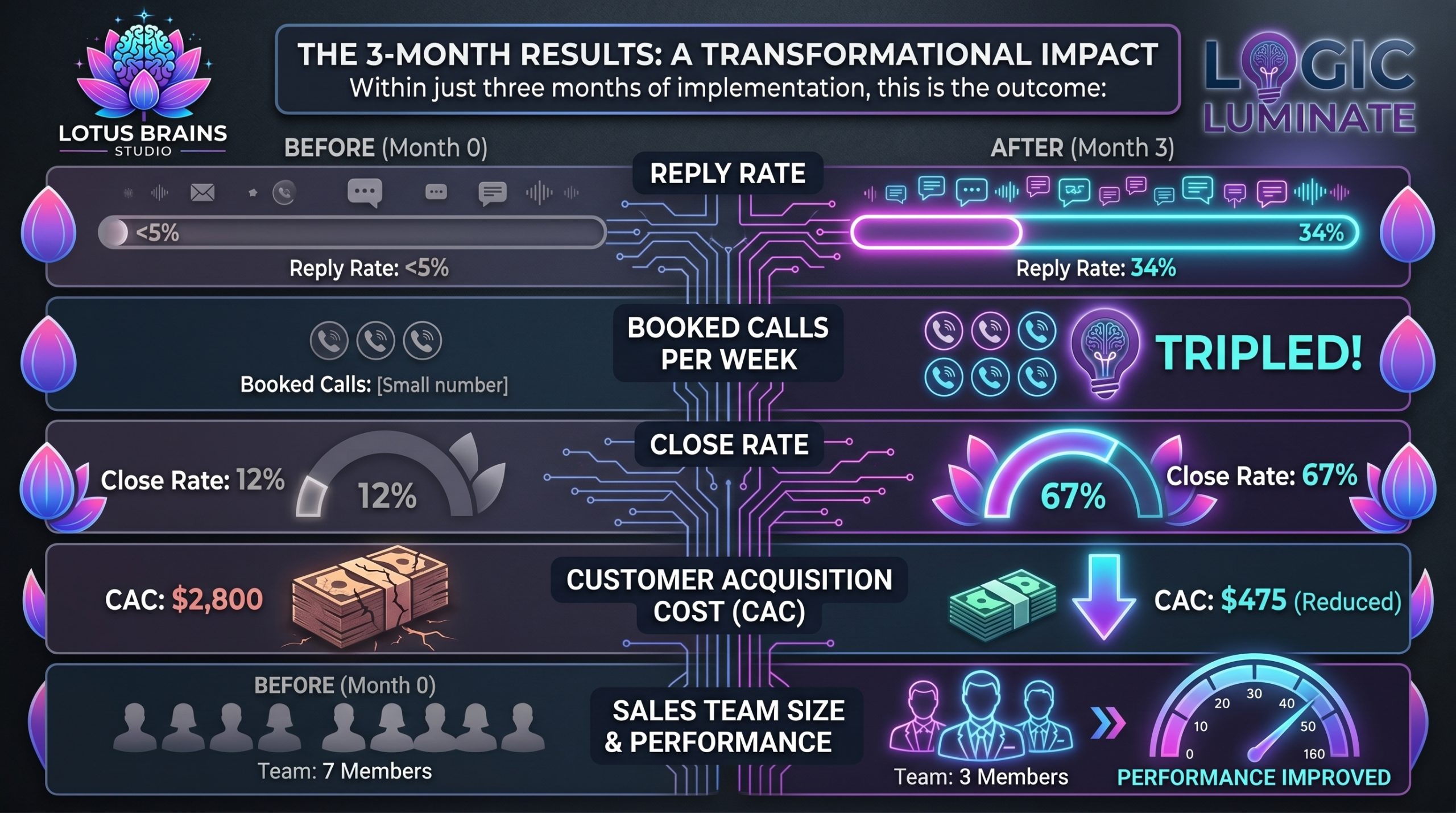
3-month results window Pipeline efficiency, sales productivity, and commercial performance improved together.
Three-month Logic Luminate results showing reply rate increase, booked calls tripled, close rate increase, customer acquisition cost reduction, and smaller sales team

Reply rate

under 5% → 34%

More relevant outreach created stronger response rates.

Booked calls

Tripled

More consistent outbound execution created more sales conversations.

Close rate

12% → 67%

Better-fit calls improved conversion from booked call to closed-won.

Customer acquisition cost

$2,800 → $475

Pipeline became less dependent on heavy manual effort.

Sales team size

7 people → 3 people

The team became smaller while performance improved.

These results represent more than marginal optimisation. Before the implementation, Logic Luminate was relying on a labour-heavy outbound process to create pipeline.

After implementation, they had a far more efficient system capable of producing stronger results with fewer people and far less manual effort.
The biggest operational shift The team could spend less time on lead research, spreadsheet admin, and repetitive outreach, and more time on strategy, campaign optimisation, live sales conversations, and client growth.

Business impact

Why the numbers improved.

The results improved because the system raised the quality of the entire outbound process. Logic Luminate was no longer forcing the same amount of effort across every prospect.

Better-fit opportunities were identified earlier. Messaging became more relevant. The strongest leads were prioritised more effectively. Follow-up became more consistent. CRM visibility improved.

The team could work from a cleaner, more commercially useful pipeline instead of relying on manual hustle across disconnected workflows.

Growth became less dependent on volume and more dependent on structured intelligence.

Client experience

What it was like working with Lotusbrains Studio.

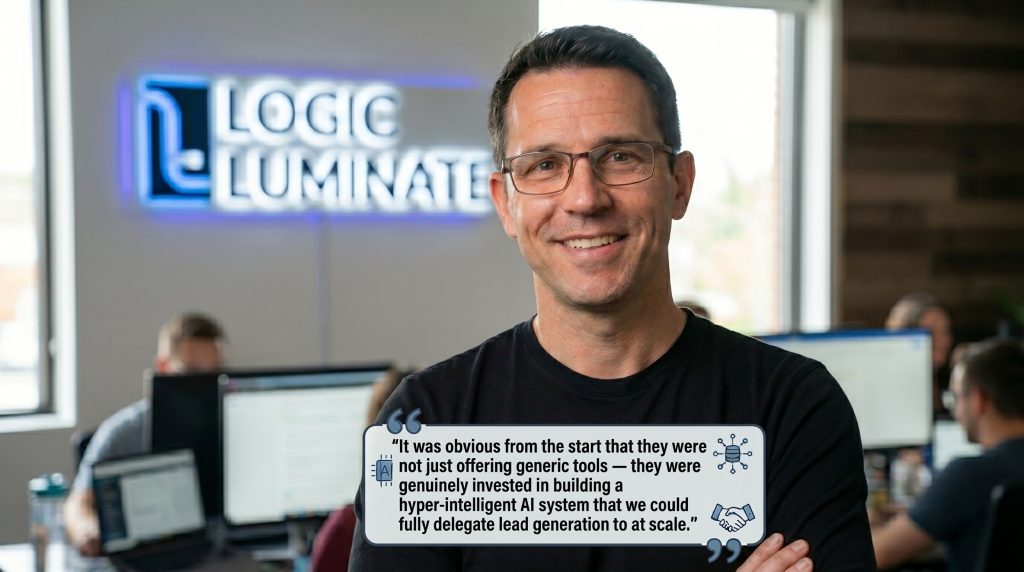
Logic Luminate was exceptionally pleased with the collaboration. More than delivering strong results, the process was smooth, thoughtful, hands-on, and commercially grounded.

01

Business understanding first

We took the time to understand how their team actually worked, where performance was being lost, and what kind of system would be useful in practice.

02

Technical capability with commercial judgment

What they valued most was that we combined AI implementation discipline with a practical understanding of revenue workflows.

03

Not generic automation

Rather than dropping in random tools, we built around their real operating model, outbound positioning, and quality standards.

The collaboration worked because the solution was not treated as a tooling exercise. It was treated as a business system that needed to improve how the team made outbound decisions, executed campaigns, and learned from performance.

Final takeaway

Logic Luminate did not need another generic outbound tool.

They needed a smarter way to identify prospects, personalise outreach, improve conversion quality, and grow pipeline without scaling manual effort in parallel.

By working with us, they replaced a fragmented, labour-heavy outbound process with an AI-driven growth engine built around relevance, prioritisation, and operational control.

For agencies and service businesses looking to scale without drowning in manual outbound work, this case study shows what becomes possible when AI is implemented properly: not just more activity, but far better leverage.

Build smarter outbound

Want to build a smarter outbound engine for your business?

If your team is spending too much time on manual prospecting, inconsistent outreach, and disconnected follow-up, we can help you design and implement AI systems that make growth more scalable.

We do not believe in generic automation. We build tailored AI workflows that align with how your business actually operates, so you can identify better opportunities, communicate more intelligently, and scale with greater efficiency.

Book a free discovery call with us today.

Let's explore how an AI-driven workflow could improve your lead generation, outbound execution, and sales efficiency.

Book a Discovery Call